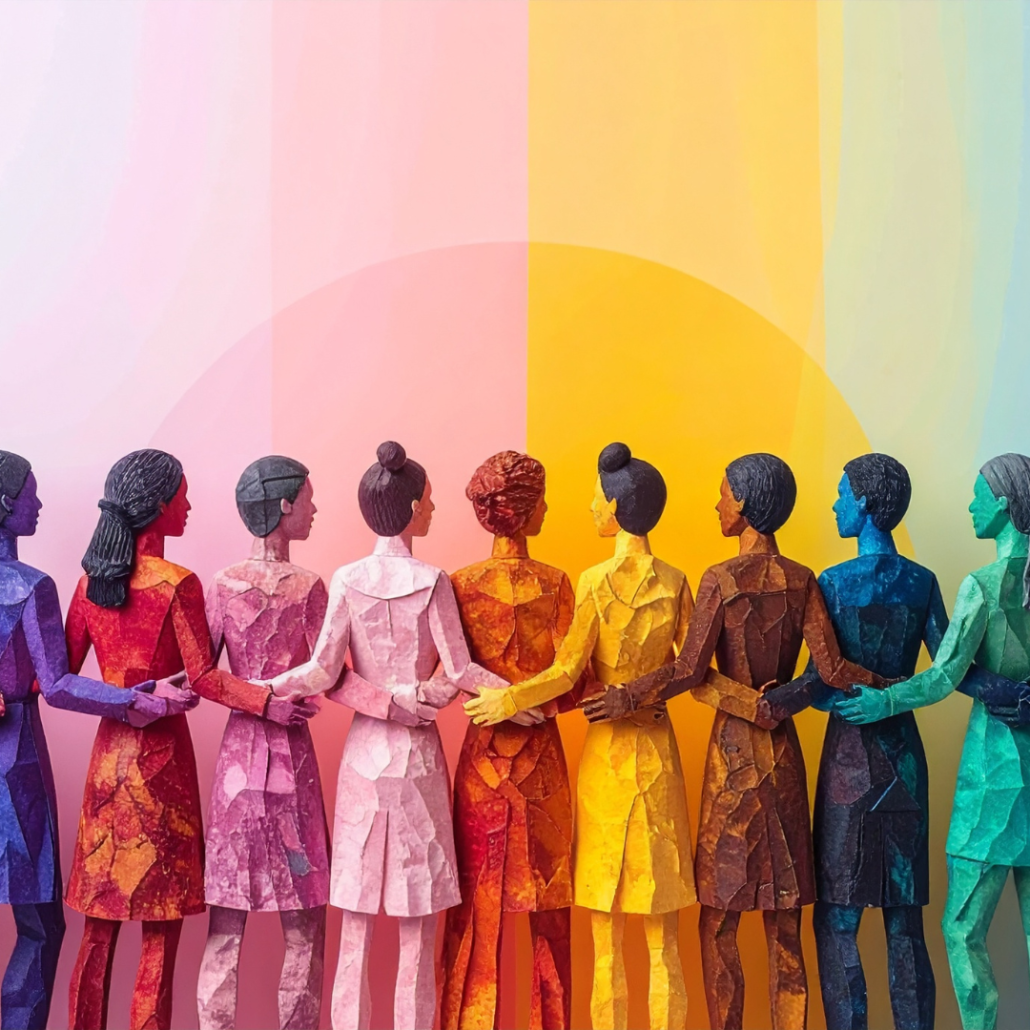
DE&I workplace policies
Everyone should feel included, respected, and heard, regardless of their gender, sexual orientation, ethnicity, or origin. DE&I (Diversity, Equality and Inclusion) policies are crucial for creating a respectful and inclusive environment for all. As part of our support and celebration of this year’s PRIDE Month, here’s a reminder of what employers should include in their DE&I policies, along with a rare and personal look into the world of work as a member of the LGBTQIA+ community.
DE&I policies aim to ensure everyone feels valued and included, regardless of their sexual orientation, gender identity, or other characteristics.
DE&I policies play a crucial role in creating an inclusive and respectful workplace, particularly when it comes to supporting LGBTQIA+ individuals. Policies should explicitly prohibit discrimination based on sexual orientation and gender identity, and go beyond simple lip service by providing meaningful benefits and accommodations.
What to include for an effective LGBTQIA+ policy
By implementing LGBTQIA+ policies, organisations can create a more inclusive and equitable workplace where all employees, including LGBTQIA + individuals, can thrive. The key elements of effective DE&I policies are:
Explicit Non-Discrimination Policies:
Policies should clearly state that discrimination based on sexual orientation and gender identity is prohibited, ensuring that all employees are treated fairly and with respect.
Inclusive Language and Practices:
HR should review and update policies to use inclusive language and ensure practices are equitable for all, including transgender individuals and those with non-binary identities.
Meaningful Benefits and Accommodations:
Policies should extend beyond basic benefits to include support for things like gender-affirming healthcare, shared parental leave, and accommodating medical appointments.
Recognition of Chosen Families:
Organisations should recognise and accommodate the chosen families of LGBTQIA+ individuals, to ensure that their needs are met.
Proactive Advocacy:
Leaders and employees should actively advocate for inclusive policies and challenge discrimination, rather than waiting for those affected to speak up.
Access to Mental Health Resources:
LGBTQIA+ individuals can and do experience mental health challenges, so organisations should ensure access to resources like counseling and wellbeing programs.
Employee Resource Groups (ERGs):
ERGs can provide a supportive community and platform for sharing experiences and advocating for change.
Data Collection and Monitoring:
Collecting and analysing data on LGBTQIA+ representation and outcomes can help organisations identify areas for improvement and track progress. Please note however, this needs to be done with the consent of the individuals and in line with the relevant legislation
Celebrate PRIDE Month:
Recognising and celebrating PRIDE Month can help to show commitment to LGBTQIA+ inclusion and build a positive culture.
Avoiding “Pinkwashing”:
Organisations should ensure that their PRIDE initiatives are not just performative gestures, but are backed by genuine policy changes and actions.
Personal insights
Being LGBTQIA+ in 2025 is vastly different from what it was 30 or even ten years ago, when a person’s true identity had to stay secret, for fear of discrimination or being overlooked for a promotion at work. But working life as a member of the LGBTQIA+ community can still be a challenge today. Here we share some personal, often heartbreaking, real-life insights and views of life and the workplace when you are a part of the LGBTQIA+ community in the UK.
“The UK is far more tolerant than many other countries, in particular the East, Middle East, Africa, Russia and some Latin countries. It is unimaginable that it can be illegal to be LGBTQIA+ in many countries and in fact not even that long ago in the UK. In many countries, people still face being detained, imprisoned, sentenced and/or killed purely for who they are, an innate characteristic that one cannot change. The difference in attitude in the UK compared to many other countries, is remarkable and near impossible to explain to anyone who has never experienced the discrimination LGBTQIA+ people face, often on a regular basis.”
“Imagine a world where you can’t be entirely honest about your personal circumstances. Put yourself in the shoes of an LGBT person for one day: You cannot openly hold hands or kiss your loved one without people frowning, commenting, or judging you. Or if you find yourself at the wrong place and wrong time, knowing that you could be even physically harmed. Sometimes merely walking to work, because of the way you dress, walk or talk, being perceived as gay, can lead to being insulted by complete strangers, and threatened with attack.”
“As a working man, customers and clients often assume you have a wife and/or children, but you cannot correct them, for fear of losing work as a result, in particular if clients are either of an older generation, from a very religious background, or from a country where LGBT is illegal. I have had to decline many an invitation from clients to go for lunch/dinner as a sign of gratitude for the work I have done, because the invitation is for me and “my wife”.
“It is a common issue I face on a weekly basis as a gay man, both inside of work and outside: “Do you live with your girlfriend?”, “How long have you and the Mrs been together?”. Outside of work, I laugh it off and correct people to say my ‘partner’ is actually male. Inside of work there is less laughter involved and much less honesty in correcting them. The risk we face by disclosing our sexuality is not just a risk we will be treated differently, but also a risk of loss to the business.”
“Everywhere you go, it is assumed you are heterosexual. Everyone assumes you may have a wife and or children. When attending functions and events, hosts and speakers often assume everyone is heterosexual. You either lie to protect yourself or you have to “come out” again publicly.”
“I still feel slightly caught off guard when someone immediately assumes and refers to my partner as “she/her” and I have to correct them to say my partner is male. One never knows what the reaction may be and sometimes the mood suddenly changes.”
“Frequently people who are heterosexual, assume that the people they are meeting, especially in a workplace setting, are straight. I remember correcting someone that my “girlfriend” was actually my “boyfriend”, and the tone of the meeting instantly changed. The following weeks I was missed off emails sent to my supervisor when previously contact was solely between myself and the client. All the previous friendliness in our correspondence was gone and it became formal business only.”
“The recent decision on trans people and the definition of a woman, creates more room for discrimination in the work place. If a member of staff or a visiting client identifies as trans, they now need their own separate facilities, a fact that yet again; reinforces being singled out as “different”, which leads to a feeling of non-inclusivity.”
“Securing a professional job can be difficult. Do you confess from the application / interview stage that you are gay? Or do you wait until you have settled into a job for a few months? Over the years, I have tried to be honest about my sexuality right from the off, expressing it as something that makes me different and sets me apart in an overly saturated market. But then I have regretted how heavily I have relied on ticking a diversity box, and that in doing so, I have overshadowed some of the more interesting things about me. For me, being gay is not my personality or my entire identity the same way being straight is not a straight person’s identity.”
“I have LGBTQ friends in a similar position to me, who constantly face the choice of either to not disclose your sexuality and blend into the crowd during job applications and interviews, or choose to disclose it and hope that by some miracle you could be hired by an organisation wishing to tick a diversity box when you are lined up against other straight candidates. On the other hand, there are an unknown number of applications rejected when HR might approve you, but perhaps the individual with the final decision in fact prefers the other straight candidate.”
“LGBTQIA+ and inclusivity is important in the workforce because it is simply about being seen and recognised. Not rejected or just a token for diversity. What helps is coming into work and discussing my relationship with colleagues like any straight person would. Having events dedicated to PRIDE, and encouraging safe spaces for employees to be open with their colleagues and feel at ease. All of this is why it is so important to recognise PRIDE month for what it is: Celebration. Love. Inclusion. Understanding. Tolerance.”
Get in touch
For support with creating DE&I workplace policies, contact a member of our employment team on 0121 698 2200 or complete on online enquiry form.

